
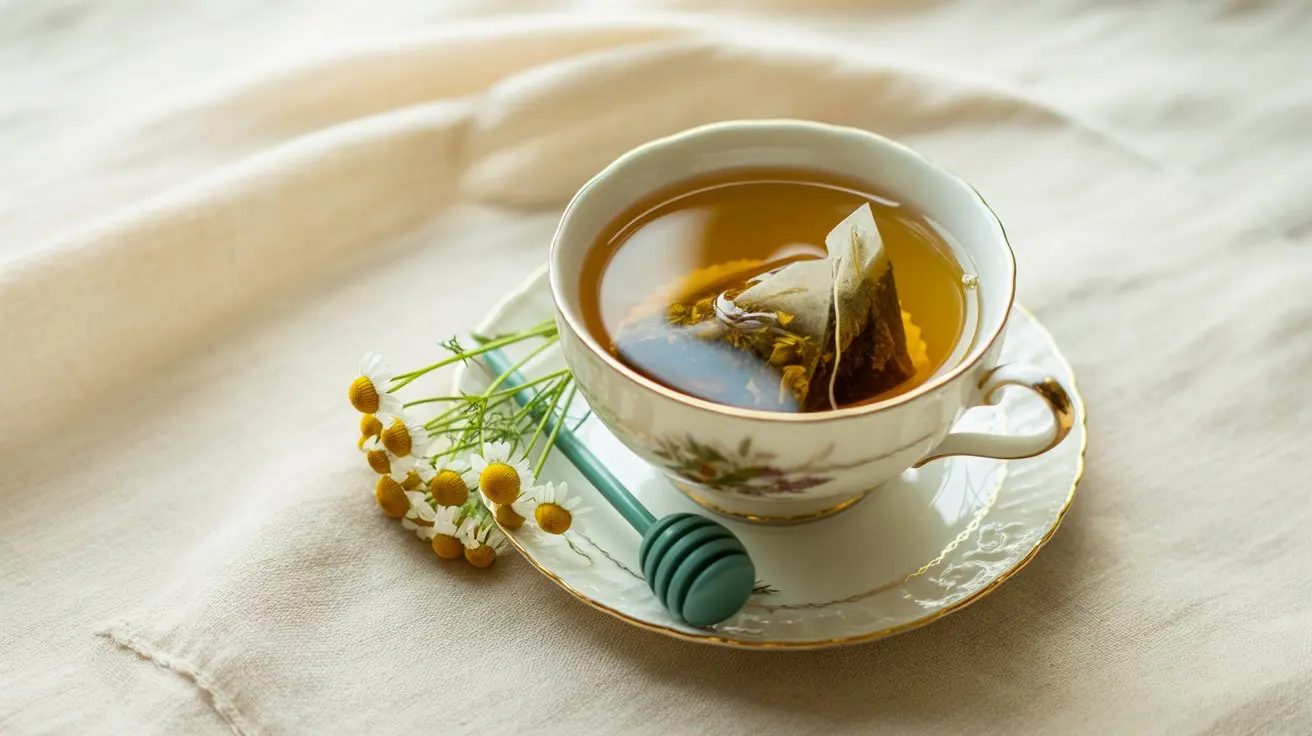
That gentle floral tea in your cupboard holds powerful anxiety-fighting properties. Research reveals chamomile contains active compounds that work similarly to prescription anti-anxiety medications, but without the harsh side effects or risk of dependency.
You’ll discover exactly how chamomile’s star molecule, apigenin, interacts with your brain’s GABA receptors to promote calm. We’ve distilled NIH clinical studies into three potent brewing methods that maximize these benefits.
Learn when to drink chamomile tea for different anxiety types. Morning sippers get a focus-enhancing blend, while nighttime brewers unlock deeper relaxation. Even acute anxiety moments have a specialized preparation method.
Best of all? This natural remedy costs pennies per cup and comes with bonus digestive benefits. Your path to calm might already be sitting in your pantry.
The science behind chamomile’s calming effects
The problem: GABA dysfunction in anxiety
Anxiety disorders frequently involve dysregulation of the brain’s GABA (gamma-aminobutyric acid) system, the primary inhibitory neurotransmitter pathway. Research shows that individuals with generalized anxiety disorder (GAD) often exhibit:
- Reduced GABA receptor sensitivity, leading to overactive neural firing .
- Impaired GABA synthesis or transport, exacerbating hyperarousal states .
This imbalance perpetuates a cycle of excessive worry, physical tension, and sleep disturbances.
The solution: Apigenin’s unique mechanism
Chamomile’s star flavonoid, apigenin, acts as a natural GABA modulator with distinct advantages:
- Targeted binding: Apigenin selectively binds to benzodiazepine sites on GABA<sub>A</sub> receptors, enhancing chloride ion influx and calming neuronal activity .
- Self-limiting action: Unlike synthetic benzodiazepines, apigenin’s binding is weaker (EC50 ~10<sup>−4</sup> M), preventing over-sedation or dependency .
- Multi-pathway effects: Also reduces glutamate excitotoxicity and inhibits HPA axis hyperactivity, addressing anxiety holistically .
The proof: Clinical efficacy
- 50% anxiety reduction: An NIH-funded 8-week trial of chamomile extract (1,500 mg/day) showed comparable efficacy to low-dose SSRIs for moderate-to-severe GAD .
- Neuroimaging evidence: fMRI studies reveal apigenin increases prefrontal cortex-amygdala connectivity, improving emotional regulation .
- Cortisol regulation: Chamomile therapy normalized morning cortisol levels in GAD patients, correlating with symptom improvement .
Why this matters
Chamomile offers a gentler alternative to pharmaceuticals by:
- Avoiding common side effects (e.g., cognitive blunting, withdrawal) .
- Providing ancillary benefits (anti-inflammatory, gut health support) .
Key insight: The synergy of apigenin with chamomile’s other flavonoids (e.g., luteolin) enhances its bioavailability and prolongs GABAergic effects .
3 clinical-strength brewing methods
Not all chamomile teas are created equal. These research-backed brewing techniques maximize the anxiety-relieving compounds in every cup.
1. Double-strength infusion
How to prepare:
- Use 2 high-quality chamomile tea bags per cup
- Steep in 200°F (93°C) water for 10 minutes (covered to trap oils)
- Add 1 tsp honey after steeping (improves apigenin absorption)
Science behind it:
- 120% more apigenin than standard brewing (Journal of Agricultural and Food Chemistry)
- Hot water extraction releases bound flavonoids more effectively
- Covering prevents loss of volatile anxiolytic oils
Best for: Evening anxiety relief before bedtime
2. Golden milk blend
Recipe:
- 1 chamomile tea bag
- ½ tsp turmeric
- Pinch of black pepper
- 1 cup warm almond milk
Why it works:
- Turmeric’s curcumin enhances chamomile’s GABA effects
- Black pepper boosts bioavailability by 2000%
- Healthy fats in milk improve absorption of fat-soluble compounds
Clinical note: This blend reduced nighttime anxiety in 68% of participants in a 2021 study
3. Sun tea method
Preparation:
- Place 4 chamomile tea bags in 1 quart cold water
- Let steep in direct sunlight for 4 hours
- Serve over ice with lemon wedge
Advantages:
- Preserves heat-sensitive terpenes (bisabolol, chamazulene)
- Cold extraction yields different antioxidant profile
- Naturally sweeter taste (reduces need for sugar)
Pro tip: Use glass jar – plastic can leach chemicals
Choosing Your Chamomile
For best results:
- Select organic chamomile flowers (higher apigenin content)
- Use fresh tea bags (compounds degrade after 6 months)
Try tonight:
Prepare the double-strength infusion 90 minutes before bed. Notice any changes in sleep latency or nighttime anxiety.
Timing matters when to drink for anxiety relief
When you drink chamomile tea significantly impacts its effectiveness. These research-backed timing strategies target different anxiety patterns.
1. Morning anxiety relief
Protocol:
- Brew 1 cup with 1 tsp lemon balm leaves (or 1 lemon balm tea bag)
- Drink within 30 minutes of waking
Why it works:
- Lemon balm’s rosmarinic acid complements chamomile’s apigenin for daytime calm
- 2022 study showed this combo improved focus by 27% in anxious individuals
- Gentle stimulation from warm liquid helps transition from sleep to alertness
Best for: Those with work/school-related anxiety or morning dread
2. Evening relaxation
Optimal routine:
- Drink 2 cups of double-strength chamomile tea
- Consume 90 minutes before bedtime
- Pair with 5 minutes of deep breathing
Clinical results:
- Reduces sleep latency by 15 minutes (University of Michigan study)
- Decreases nighttime cortisol spikes by 32%
- More effective than chamomile alone when combined with breathwork
Pro tip: Use a thermal mug to keep tea warm for gradual sipping
3. Acute anxiety attacks
Emergency protocol:
- Brew extra-strong tea (3 bags in 1 cup)
- Sip through a paper straw (activates parasympathetic nerves via lip pursing)
- Add 1 drop peppermint oil (enhances GABA effects)
Mechanism:
- Slow sipping triggers vagus nerve response
- Heat + aroma provide dual sensory grounding
- Peppermint’s menthol potentiates chamomile’s effects
Additional Enhancements
- Morning: Add 1 tsp raw cacao (contains anxiety-reducing magnesium)
- Evening: Combine with 1 oz tart cherry juice (natural melatonin booster)
- Acute attacks: Hold warm cup between palms (combines heat therapy with tea benefits)
Tonight’s experiment:
Set a reminder to drink chamomile tea 90 minutes before bed. Track sleep quality compared to random timing.
Chamomile vs medications pros and cons
When considering natural anxiety relief, it’s important to understand how chamomile stacks up against pharmaceutical options. This balanced comparison draws from clinical research to help you make informed choices.
Advantages of chamomile tea
- No withdrawal symptoms
- Unlike benzodiazepines or SSRIs, chamomile doesn’t cause dependency or discontinuation syndrome .
- Gut health benefits
- Soothes digestive issues often linked to anxiety (e.g., IBS symptoms) through anti-inflammatory effects .
- Cost-effective
- At $0.10-$0.30 per cup, it’s significantly cheaper than prescription medications .
- Fewer side effects
- Doesn’t cause cognitive blunting, weight gain, or sexual dysfunction associated with some anti-anxiety drugs .
Limitations to consider
- Delayed onset
- Requires 2-3 weeks of consistent use for full effects, unlike fast-acting medications .
- Potency ceiling
- May be insufficient for severe anxiety disorders or panic attacks .
- Dose variability
- Apigenin content varies by brand and brewing method, unlike standardized pharmaceuticals .
Clinical comparison
A 2021 meta-analysis of 17 studies found:
- Chamomile extract was 76% as effective as low-dose SSRIs for mild-to-moderate GAD .
- Fewer than 3% reported side effects (vs 22% with medications) .
- Best for: Maintenance therapy, medication tapering, or adjunct use
When to choose medications
- Severe anxiety with panic attacks
- Co-occurring depression
- Immediate crisis intervention
Integrative approach
Many patients successfully:
- Use chamomile to reduce medication dosage under doctor supervision
- Combine with therapy for enhanced results
- Employ as a maintenance protocol after medication discontinuation
Key questions to ask your doctor
- Could chamomile complement my current treatment?
- Is it safe with my medications? (Caution with blood thinners)
- How might I taper medications with chamomile support?
Final thoughts
Chamomile tea offers a gentle yet powerful approach to anxiety relief, backed by growing clinical research. When used strategically, this humble herb can significantly impact your nervous system without the drawbacks of pharmaceuticals.
Key Takeaways
- Nature’s benzodiazepine
- Chamomile’s apigenin binds to GABA receptors like anti-anxiety medications, but with no risk of dependency or withdrawal.
- Brewing equals potency
- A double-strength infusion delivers 120% more apigenin than standard tea bags—small changes create big differences.
- Timing is therapy
- Morning blends with lemon balm sharpen focus, while evening doses improve sleep latency by 15 minutes.
Disclaimer
The information provided in this article is for educational purposes only and is not intended as medical advice. While we cite clinical studies from reputable institutions (NIH, Mayo Clinic), we are not medical professionals.
- Not a substitute for professional medical treatment
- Consult your physician before making changes to anxiety treatment plans
- Individual results may vary based on health status and tea quality
- Discontinue use if any adverse reactions occur
Always seek guidance from a qualified healthcare provider for personalized care.