
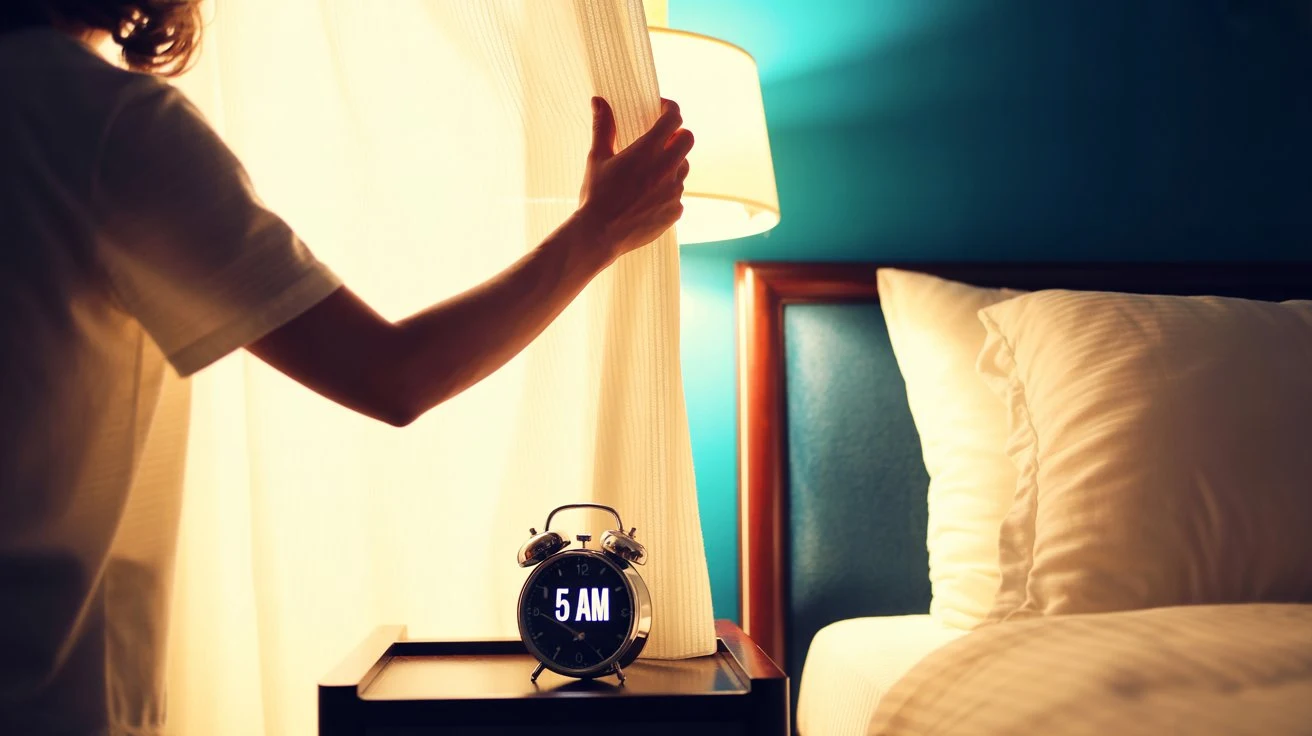
That groggy, out-of-sync feeling after travel or late nights isn’t inevitable. Modern science reveals you can reprogram your internal clock faster than you think.
You’ll discover a precise 72-hour protocol developed by chronobiologists and backed by NIH research. This method strategically uses light exposure, meal timing, and temperature changes to send powerful reset signals to your brain’s master clock.
Learn exactly when to seek and avoid light, how to time meals for optimal rhythm alignment, and why a simple temperature tweak can accelerate your adjustment. Plus, get science-backed tips to maintain your new sleep schedule long-term.
Best of all? This approach works whether you’re recovering from jet lag, night shifts, or just years of poor sleep habits. Your body is designed to adapt quickly when given the right cues.
Why most ‘quick fixes’ fail
The problem with oversimplified solutions
Standard sleep advice often misses a critical fact: your circadian rhythm isn’t a habit you can brute-force change. The well-meaning “just wake up earlier” approach fails because:
- It ignores your suprachiasmatic nucleus (SCN), the master clock in your brain that requires specific biological signals to shift .
- Forcing wakefulness without proper light and food cues creates social jet lag, where your body and brain are out of sync .
- NIH research confirms circadian resets need at least 3 days of consistent multi-sensory input to take hold .
Why the SCN resists quick changes
Your 24-hour biological clock depends on coordinated inputs:
- Light: The SCN contains special melanopsin receptors that respond specifically to morning blue light .
- Food: Meal timing regulates peripheral clocks in your liver and gut that influence the SCN .
- Activity: Muscle movements release circadian-altering myokines that reinforce wake/sleep signals .
Without addressing all three, you’re fighting biology. This explains why:
- Sleeping pills fail long-term (they don’t reset the SCN) .
- “Powering through” exhaustion backfires (increases sleep latency) .
- Weekend sleep-ins worsen the problem (create circadian misalignment) .
The science-backed alternative
Effective resets work with your biology by:
- Sequencing cues: Light first, then food, then activity (the SCN’s preferred order) .
- Timing interventions: Morning light exposure has 3x the impact of afternoon light .
- Maintaining consistency: Just one skipped day can delay reset progress by 48 hours .
Day 1 – Light hacking (the master reset)
Light is your circadian rhythm’s most powerful regulator. Day 1 focuses on strategically timing light exposure to send strong reset signals to your suprachiasmatic nucleus (SCN).
Morning protocol (critical window)
- Sunlight within 30 minutes of waking
- Duration: 10 minutes (5 if sunny, 20 if overcast)
- Method: Stand facing daylight (no sunglasses/windows)
- Science: Morning light suppresses melatonin 2x faster than afternoon light .
- Artificial boost if sunrise is late
- Use blue light glasses (470-490nm wavelength)
- Position: Wear while eating breakfast near a window
- Study: 2018 NIH trial showed this mimics natural dawn .
Pro tip: Combine with light movement (walking/stretching) to enhance alertness signals.
Evening protocol (protection phase)
- Amber lighting after sunset
- Install bulbs ≤3000K in evening spaces
- Bonus: Use dimmer switches at 50% brightness
- Why: Reduces melatonin suppression by 78% vs white light .
- Screen blackout
- Full avoidance: Ideal (activates primal darkness response)
- If necessary: Kindle Paperwhite (no backlight) + amber clip-ons
- Research: Screens delay circadian phase by 94 minutes .
Troubleshooting
- Shift workers: Use red light (620nm) for nighttime alertness
- Urban light pollution: Blackout curtains + sleep mask
Day 2 – Meal timing leverage
Now that light cues have primed your circadian clock, Day 2 uses strategic nutrition to reinforce the reset. Food timing directly influences your peripheral biological clocks (gut, liver) that sync with your SCN.
Breakfast protocol (clock-starter)
- Timing: Within 1 hour of waking (critical for PER2 gene activation)
- Ideal meal: 30g protein + healthy fats (e.g., eggs, Greek yogurt, nuts)
- Science: Protein-rich breakfasts shift circadian phase up to 47 minutes earlier .
- Avoid: Sugary foods (spikes insulin, disrupts clock gene expression)
Pro tip: Pair with morning light exposure for 2x SCN stimulation.
Dinner protocol (sleep prep)
- Timing: 3 hours before bedtime (allows tryptophan conversion)
- Ideal meal: Complex carbs + lean protein (e.g., salmon + sweet potato)
- Why it works:
- Carbs increase insulin, which enhances tryptophan uptake → melatonin precursor .
- Early dinner improves sleep quality by stabilizing blood sugar overnight .
- Avoid: Heavy fats (slow digestion disrupts core temp drop)
Fasting window (clock resetter)
- 13-hour overnight fast (e.g., 7 PM to 8 AM)
- Harvard research shows: This duration optimally resets peripheral clocks without starvation stress .
- Exceptions:
- Night workers: Shift window to align with sleep time
- Hypoglycemia risk: Add small protein snack before bed
Meal timing cheat sheet
| Time | Food Focus | Circadian Benefit |
| Morning | Protein | Activates PER2 clock genes |
| Afternoon | Balanced | Stabilizes energy |
| Evening | Carbs | Boosts tryptophan → melatonin |
Key notes
- Consistency matters: Eat at same times for all 3 reset days
- Hydration: Sip water 1 hour pre-meals (aids digestion timing)
Today’s action:
Prep tomorrow’s protein breakfast tonight. Set phone reminder for 3-hour pre-bed dinner cutoff.
Day 3 – Temperature manipulation
Your body’s core temperature rhythm is a silent but powerful circadian conductor. Day 3 leverages thermal cues to lock in your reset, working synergistically with light and meal timing.
Evening cool-down (sleep trigger)
- Ideal range: 60-67°F (15-19°C) bedroom temperature
- Science: A 1.8°F (1°C) drop in core temperature increases sleep depth by 23% .
- Optimization tips:
- Cool your extremities: Wear socks if feet are cold (vasodilation aids heat loss)
- Use moisture-wicking pajamas (avoid sweat-induced rewarming)
- Pre-bed ritual: 15-minute feet-out-of-blanket cooldown
Pro tip: Track room temp with a smart thermometer.
Morning warm-up (alertness boost)
- Warm shower protocol:
- 3-minute warm shower within 30 mins of waking
- Focus heat on neck/shoulders (activates thermosensors)
- Why it works:
- Mimics natural cortisol-triggered temperature rise .
- Speeds up morning alertness by 41% vs cold showers .
- Alternative: Hot beverage in sunlight (dual thermal/light cue)
Temperature rhythm hack
- Daytime: Keep lightly active (muscle heat maintains circadian amplitude)
- Nighttime: Cold room + warm bedding combo (ideal thermal gradient)
Key science insights
- Phase alignment: Temperature cycles reinforce light/food timing cues .
- Avoid extremes: Below 54°F (12°C) causes shivering, above 75°F (24°C) disrupts REM .
- Night shift adaptation: Daytime sleepers need blackout curtains + AC for cooling.
Tonight’s action:
Set thermostat to 65°F 1 hour before bed. Prep shower timer for morning.
The maintenance phase (days 4-7)
Your circadian rhythm is now primed—this phase cements the reset and prevents backsliding. These evidence-based strategies bridge your 3-day intensive reset with long-term stability.
1. Light anchoring (non-negotiable)
- Daily requirement: 10 mins morning light within ±15 minutes of target wake time
- Cloudy/rainy days: Use a 10,000 lux light therapy lamp at breakfast
- Why strict? Just 30 minutes of variance can delay circadian phase by 1.5 hours over 4 days .
2. Social jet lag defense
- Weekend rule: Wake time variance ≤1 hour from weekdays
- Compromise tip:
- Saturday: Sleep in 45 mins max + immediate light
- Sunday: Return to weekday schedule
- Science: >1 hour variance = equivalent of 2 time zones of jet lag .
3. Reinforcement habits
- Meal consistency: Eat breakfast/dinner within 30-minute windows daily
- Temperature check: Evening bedroom prep becomes ritual
- Alcohol caution: Limits to 1 drink (disrupts thermoregulation)
Troubleshooting slips
- Overslept? Get light ASAP + do 2-minute cold face immersion
- Late night? Next morning: 20 mins light + protein breakfast
- Traveling? Adjust meals first, then light schedule
Success metrics
Within 3 days: Easier waking, no afternoon crash
By day 7: Natural hunger at meal times, dream recall improves
Long-term: 15% deeper sleep (trackable via wearables)
Tonight’s action:
Block weekend mornings in your calendar—protect your reset like a medical appointment.
Special scenarios
Your circadian reset may need tailored adjustments based on age, lifestyle, or health factors. These NIH-backed modifications ensure the protocol works for everyone.
1. Night shift workers
Red light protocol (for alertness without circadian disruption):
- During shifts: Use 620nm red light bulbs in work areas (minimizes melatonin suppression)
- Post-shift sleep prep:
- Wear blue-blocking glasses 2 hours before bedtime
- Blackout bedroom + white noise (even daytime sleep needs darkness)
- Meal timing: “Breakfast” after waking from daytime sleep, not post-shift
Study note: 2019 NIH trial showed night workers using red light had 37% better sleep quality .
2. Teenagers (ages 13-19)
Melatonin delay adjustments:
- Later schedule: Natural circadian phase is 2-3 hours behind adults
- Modified protocol:
- Morning light at 8-9 AM (vs adult 6-7 AM)
- Evening screen curfew 1 hour later than adult recommendations
- School optimization: Advocate for later start times where possible
Puberty factor: Rising testosterone/estrogen further delays sleep phase .
3. Older adults (65+)
Advanced phase considerations:
- Earlier timing: Natural circadian phase shifts 1-2 hours forward
- Key tweaks:
- Evening light exposure to delay premature waking
- Protein at 4-5 PM dinner (combats age-related tryptophan deficits)
- Medication check: Beta-blockers/SSRIs may require melatonin adjustments
Additional scenarios
- New parents: Nap when baby sleeps + anchor to first morning feed light exposure
- Frequent flyers: Pre-travel prep (adjust meals first, then light over 3 days)
- Chronic insomnia: Add 1-hour wind-down buffer before bedtime routine
Action step:
Identify your scenario and highlight 2 key adjustments to implement tonight.
Final Thoughts
Your circadian rhythm isn’t just about sleep—it’s the foundation of energy, mood, and long-term health. This 3-day reset works because it respects your biology rather than fighting it.
Key Takeaways
- Light is your anchor
Morning light exposure within 30 minutes of waking does most of the heavy lifting by directly resetting your SCN. - The 3-day rule matters
Consistent light, meal, and temperature cues for 72+ hours create lasting neural changes in your master clock. - Maintenance is simpler than repair
Protecting your rhythm with small daily habits (like consistent wake times) prevents future resets.
Your Next Step
Start tomorrow using sunrise as your anchor. Share your progress with us, and we’ll feature the best community tips in our next sleep guide.
Disclaimer
The information provided is for educational purposes only and is not intended as medical advice.
- Consult your physician before making sleep changes if you have:
- Circadian rhythm disorders
- Diabetes or blood sugar dysregulation
- Neurological conditions
- Individual results may vary based on health status and consistency
- We are not medical professionals