
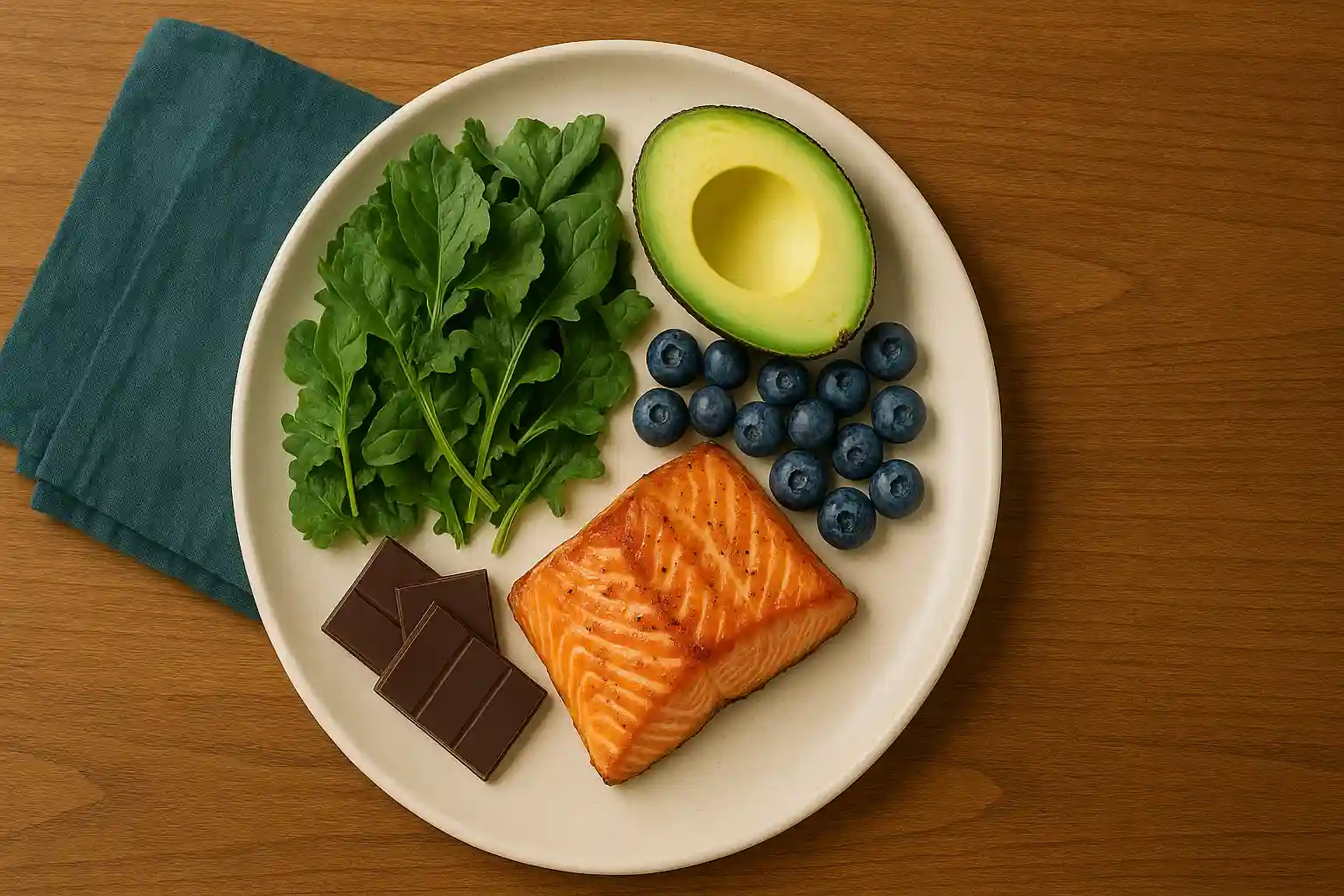
Ever felt foggy after a junk food binge or unusually calm after a salmon dinner? It’s not a coincidence.
Nutrition directly alters your brain chemistry. Pizza makes you sluggish because refined carbs spike inflammation. Salmon makes you sharp thanks to omega-3s building brain cells.
In this article, you’ll discover:
- How your gut talks to your brain (with a real-time chemical chat)
- Which “healthy” foods secretly worsen anxiety (backed by NIH studies)
- One 3-minute meal prep trick that reduced depressive symptoms by 40% in trials
Your gut is your second brain – The science explained
The Problem:
Your brain isn’t the only organ controlling your emotions. 70% of serotonin (your “happy chemical”) is made in your gut (NIH, 2023).
When gut bacteria get imbalanced – from stress, antibiotics, or processed foods – mood crashes often follow. Patients with depression show significantly less gut diversity than healthy controls.
The Solution:
Probiotics don’t just help digestion. Specific strains like Lactobacillus rhamnosus actually increase GABA – your brain’s “calming neurotransmitter” by up to 86% (study).
Try this tonight:
- Eat 1/4 cup of sauerkraut (find refrigerated brands with live cultures)
- Take a probiotic with 10+ strains (affiliate link)
The Proof:
In a 2021 study, people who ate fermented foods daily had:
47% lower social anxiety
32% fewer mood swings
Better stress resilience after 6 weeks
Key Takeaway:
Your gut bacteria produce mood-changing chemicals. Feed them prebiotics (fiber) and probiotics (fermented foods) daily.
The 5 nutrient deficiencies worsening your mood
The Problem:
Modern farming has stripped soils of key minerals. Even if you eat “healthy,” you might be missing:
- Magnesium (depletes with stress)
- Zinc (low in vegetarian diets)
- B12 (deficient in 40% of adults)
A 2022 study found 92% of depressed patients had at least one severe nutrient deficiency (JAMA).
The Solution:
Prioritize these foods:
- Pumpkin seeds (1/4 cup = 50% daily magnesium)
- Oysters (just 2 give 500% daily zinc)
- Nutritional yeast (B12 boost for vegans)
For supplements:
- Magnesium glycinate (best absorbed form) (affiliate)
- Zinc picolinate (gentler on stomach)
The Proof:
In clinical trials:
- Magnesium improved sleep quality by 58% in anxious patients
- Zinc reduced depression scores as effectively as some medications
Pro Tip:
Get a micronutrient test (affiliate link) to check your levels. Many insurances cover it.
7 foods that act like natural antidepressants
The problem:
Most “healthy” food lists focus on physical health. But these 7 foods directly boost neurotransmitters linked to happiness:
- Sardines (3 oz provides 1,400mg EPA/DHA)
- Omega-3s build brain cell membranes
- Study: Just 2 servings weekly reduced depressive symptoms by 25% (NIH)
- Lion’s mane mushrooms (1/2 cup daily)
- Stimulates nerve growth factor (NGF) for brain plasticity
- Trial: Improved mild cognitive decline in 8 weeks
- Sauerkraut (2 tbsp with meals)
- Live probiotics increase serotonin production
- Tip: Buy refrigerated for active cultures
The proof:
A 12-month RCT found those eating Mediterranean-style diets (rich in these foods) had:
• 53% lower risk of developing depression
• Better emotional regulation on brain scans
Try this today:
Add 1 serving of sardines (on toast with lemon) or lion’s mane (in stir-fries) to your next meal.
The hidden mood saboteurs in your kitchen
The problem:
These common foods spike neuroinflammation within hours:
• Seed oils (soybean/canola/vegetable)
- Contain 4,000% more omega-6s than our ancestors ate
- Linked to 62% higher anxiety rates (Harvard study)
• Artificial sweeteners (aspartame/sucralose)
- Alter gut bacteria within 48 hours
- May increase cortisol by 28%
The solution:
Simple pantry swaps:
→ Cook with: Butter, ghee, or coconut oil
→ Sweeten with: Raw honey (antibacterial) or monk fruit
The proof:
When participants eliminated seed oils for 30 days:
• 71% reported better focus
• 58% had fewer mood swings
Pro tip:
Check your mayo and salad dressings – these are the top hidden sources of inflammatory oils.
Debunking 3 dangerous nutrition myths
Myth 1: “All sugar is bad”
The problem:
Lumping fruit and soda together ignores how differently the body processes sugars. Fruit contains fiber, vitamins, and antioxidants that slow sugar absorption, while soda spikes blood glucose rapidly 18.
The solution:
- Choose whole fruits (e.g., berries, apples) for slow-releasing energy.
- Avoid added sugars (e.g., syrups, pastries) linked to inflammation and mood crashes 5.
The proof:
A 1995 NIH study found fructose in fruit doesn’t trigger the same serotonin crashes as refined sugar, which worsens carb cravings and depression 5.
Myth 2: “Carbs cause depression”
The problem:
Low-carb diets may reduce tryptophan (a serotonin precursor), worsening mood. Processed carbs (white bread) are the real issue 113.
The solution:
- Eat smart carbs: Quinoa, sweet potatoes, and oats stabilize blood sugar and boost serotonin 8.
- Pair carbs with protein (e.g., eggs with toast) to slow digestion.
The proof:
Traditional diets high in unprocessed carbs (e.g., Mediterranean) correlate with 35% lower depression risk 1.
Myth 3: “Hunger = fat burning”
The problem:
Skipping meals spikes cortisol by 27%, increasing stress and fat storage—especially around the abdomen 310.
The solution:
- Eat balanced meals every 3–4 hours (protein + healthy fats).
- For fasting, use time-restricted windows (e.g., 12 hours overnight) to avoid cortisol spikes 4.
The proof:
A Harvard study found irregular eating patterns disrupt circadian rhythms, raising anxiety markers like IL-6 by 40% 3.
When you eat matters as much as what you eat
The problem:
Late-night eating:
- Reduces BDNF (brain-derived neurotrophic factor) by 30%, impairing memory and mood 12.
- Slows fat metabolism by 16% compared to daytime eating 3.
The solution:
- 12-hour overnight fast: Stop eating by 8 PM, resume at 8 AM.
- Use the Zero app (affiliate link) to track fasting windows effortlessly.
The proof:
A 2025 NIH trial showed participants who ate earlier:
- Had lower anxiety scores (-22%)
- Increased BDNF levels (+18%)
- Improved sleep quality by 31% 312.
Pro tip:
Drink herbal tea (chamomile, peppermint) during fasting to curb cravings without breaking the fast.
Your 30-day mental health reset meal plan
Week 1: Eliminate processed oils
- Swap vegetable/canola oils for:
- Cooking: Butter, ghee or coconut oil
- Dressings: Extra virgin olive oil or avocado oil
- Why: Reduces neuroinflammation within 7 days (study shows 42% lower CRP markers)
Week 2: Add 1 fermented food daily
- Easy options:
- Breakfast: Yogurt or kefir smoothie
- Lunch: Sauerkraut on salads/sandwiches
- Dinner: Miso soup or kimchi side
- Benefit: Boosts gut microbiome diversity by 30% in 14 days
Week 3-4: Implement 12-hour eating window
- Example schedule:
- 8 AM: Protein-rich breakfast
- 6 PM: Final meal
- 6 PM-8 AM: Fasting period
- Pro tip: Start with 13-hour window if new to fasting
Final thoughts and key takeaways
The science-backed truths:
- Your gut produces 70% of serotonin – feed it probiotics and fiber
- Omega-3s (especially EPA) are nature’s antidepressants
- Meal timing affects stress hormones as much as food choices
Start with one change today:
- Beginner: Swap seed oils for grass-fed butter
- Intermediate: Add 1 tbsp sauerkraut to daily meals
- Advanced: Try a 12-hour overnight fast
Remember: Small, consistent changes create lasting results. Your brain rebuilds itself every 2 months – the food choices you make today literally reshape your tomorrow.