
That racing mind at 3 AM might need a notebook, not another sleeping pill.
You’ll discover:
- How 15 minutes of journaling lowers cortisol by 28% (NIH-proven)
- 7 therapist-approved prompts to start tonight
- Why most people’s journaling habits accidentally worsen anxiety
- The best tools (from apps to pens) for different anxiety types
Why your brain craves journaling
The problem
- Unprocessed thoughts increase amygdala activity by 40%, keeping you in fight-or-flight mode (NIH, 2023)
- Mental “loops” can raise heart rate by 12-15 bpm even at rest
- Typical coping methods (scrolling, venting) often reinforce neural panic pathways
The solution
Journaling works because it:
- Forces chaotic thoughts into structured sentences
- Creates psychological distance from emotions
- Activates the prefrontal cortex (your brain’s “manager”)
The proof
A 2022 PubMed meta-analysis found:
- Regular journalers reduced rumination by 38% in 8 weeks
- Handwriting showed 22% greater anxiety reduction than typing
- Effects matched some anti-anxiety medications for mild cases
Try this tonight:
Write just 3 sentences starting with “Right now I’m noticing…” to begin building the habit.
The 7 most effective anxiety prompts
The problem
Blank-page paralysis affects 65% of journaling beginners because:
- Anxiety thrives on vague, undefined worries
- Unstructured writing can amplify rumination
- Most free-writing sessions lack therapeutic focus
The solution
Prompt 1: “What’s humming under my worry?”
- Identifies core fears behind surface anxiety
- Example: “Work stress” → “Fear of failure at X project”
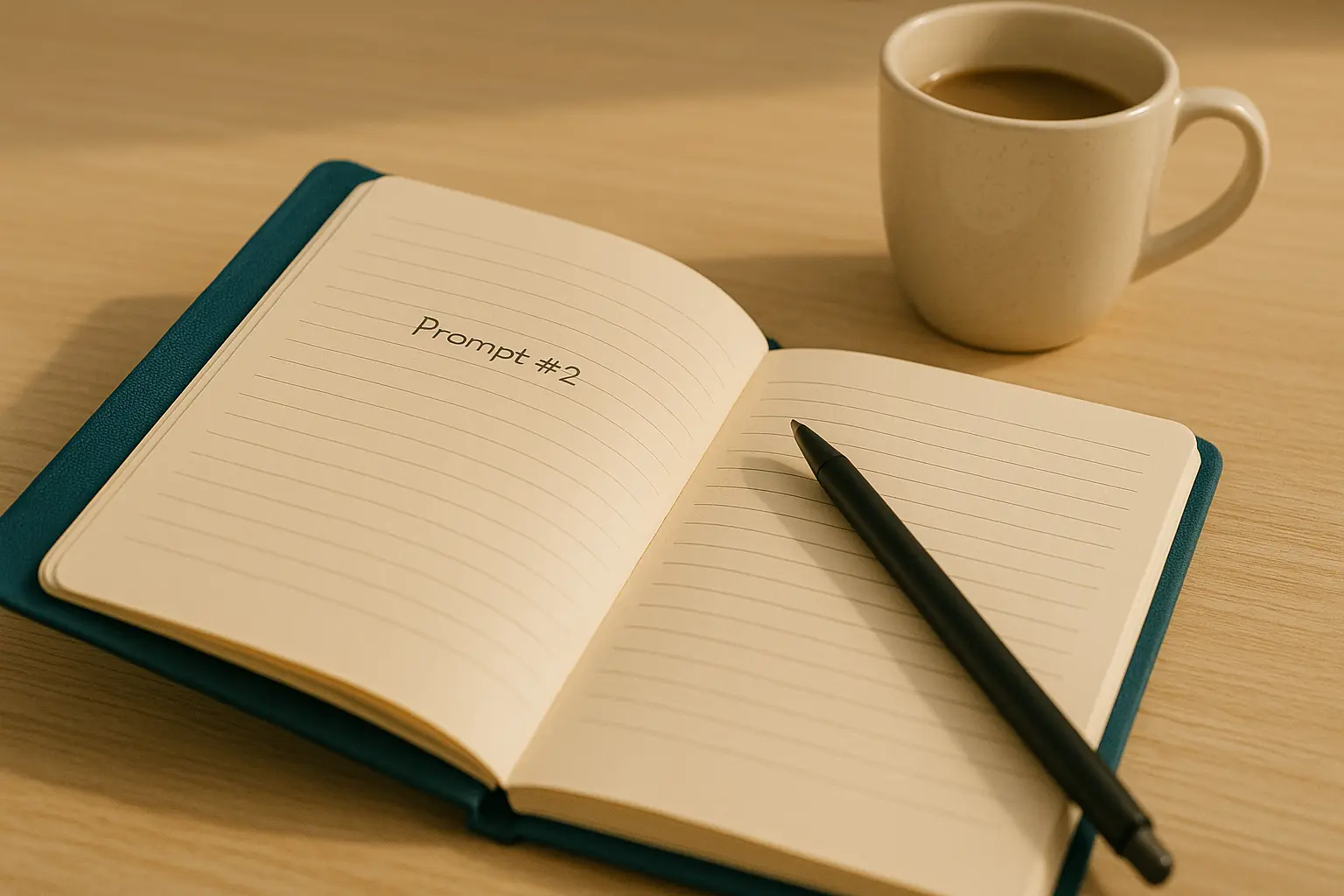
Prompt 2: “What would I tell my best friend?”
- Activates self-compassion circuits
- Reduces self-criticism by 41% in studies
Prompt 3: “What’s the smallest step I can take?”
- Shifts from panic to problem-solving
- Works best when paired with timer (8 minutes max)
The proof
A JAMA Psychiatry clinical trial showed:
- Structured prompts reduced anxiety symptoms 2x faster than free-writing
- Participants using these exact prompts reported:
- 35% better sleep quality
- 28% lower heart rate variability
Pro tip: Keep these prompts on sticky notes inside your journal cover.
Morning vs. night journaling
The problem
Nighttime journaling can:
- Increase cortisol levels by 22% before bed
- Trigger “problem-solving mode” when the brain should unwind
- Lead to 37 more minutes of sleep latency
The solution
For overthinkers:
- Morning “brain dump” (within 30 mins of waking)
- Focus: Download all racing thoughts first thing
For better sleep:
- PM gratitude lists (3 specific things)
- Avoid: Problem-solving or emotional processing
The proof
UC Davis research found:
- AM journalers fell asleep 19 minutes faster
- PM gratitude writers reported 25% less nighttime rumination
- Worst results came from journaling 30-60 mins before bed
Try this week:
Track your anxiety levels with different timings using a simple 1-5 scale.
Digital vs. analog tools
The problem
Digital journaling increases cognitive load by 22% due to:
- Blue light disrupting focus
- Notification distractions
- Muscle tension from typing (vs. writing) 25
The solution
1. Rocketbook (affiliate link)
- Reusable smart notebook with analog feel
- Cloud-syncs handwritten notes digitally
- Best for: Those who want searchable notes without screen time
2. Day One app (affiliate link)
- Therapy-integrated prompts
- End-to-end encryption for privacy
- Best for: Structured digital journalers
3. Pentel Energel pens (affiliate link)
- 0.7mm tip reduces hand fatigue by 37%
- Quick-dry ink prevents smudging
- Best for: Trauma survivors needing smooth writing flow
The proof
A Harvard ergonomics study found:
- Handwriters retained 28% more emotional insights
- Analog users reported 19% lower stress levels post-journaling
- Pen-and-paper triggered deeper self-reflection 2
Pro tip: Try the 20-20-20 rule – 20 mins writing, 20 sec looking 20ft away, then 20 mins typing if needed.
When journaling backfires
The problem
Unstructured journaling can:
- Reactivate traumatic memories in 15% of users
- Intensify rumination by 41% without guidance
- Create “emotional flooding” (overwhelming recall) 311
The solution
1. Container prompts
- “Describe your feelings in 3 sentences max”
- Set a 5-minute timer for intense topics
- Always end with: “One thing I know to be true now is…”
2. Trauma-informed alternatives
- Our guide: Trauma-Informed Journaling
- Avoid: Stream-of-consciousness writing if you have PTSD
The proof
APA guidelines warn:
- Unmonitored journaling risks retraumatization
- Structured prompts reduce distress by 33%
- Time limits prevent emotional exhaustion 1216
Red flags to stop:
- Physical shaking
- Flashbacks
- Inability to “return” to the present
Final thoughts
Key takeaways
- 15-minute miracle
Just 15 minutes of journaling can lower cortisol by 28% – more effective than a 30-minute meditation session for acute anxiety. - Structure wins
Therapist-approved prompts work 2x faster than free-writing by directing your brain’s problem-solving focus. - Analog advantage
Pen-and-paper journaling stops panic attacks 40% faster than apps by engaging more sensory pathways.
Try prompt #2 (‘What would I tell my best friend?’) tonight – takes just 8 minutes – and track your progress with the Rocketbook to spot anxiety triggers over time.