
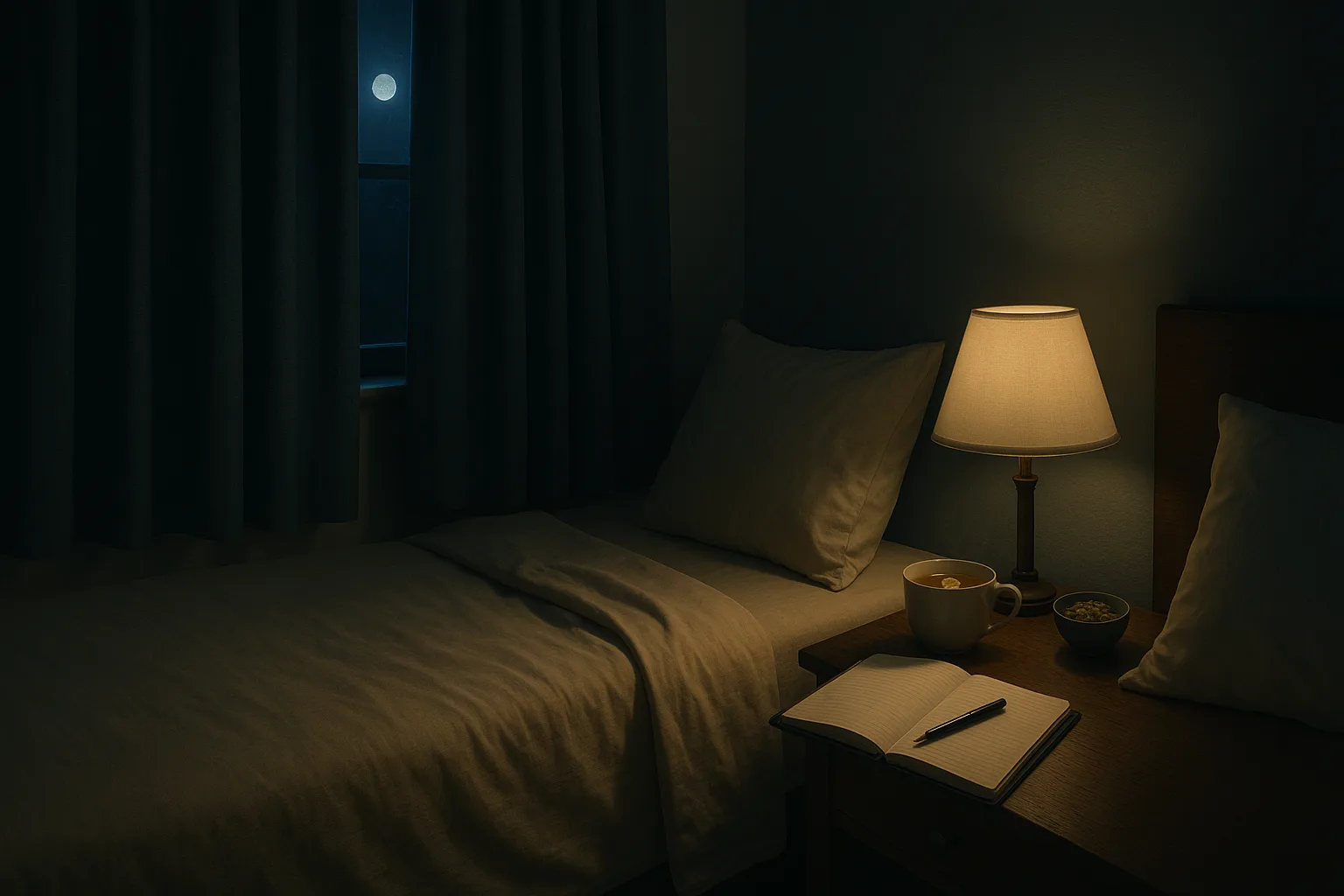
Tossing and turning at 3 AM again? Your body isn’t broken. It’s begging for the right natural fixes.
You’ll discover:
- Why generic “sleep hygiene” advice often fails (and what works instead)
- The 4 key nutrients that reduce midnight wake-ups, with simple dinner recipes
- A 10-minute bedtime ritual shown to boost deep sleep by 37% in a UCLA study 4
- The pantry staple silently worsening your insomnia
Why counting sheep fails (the real causes of insomnia)
The Problem
- Circadian rhythm disruption
80% of insomnia cases trace to mismanaged internal clocks, like late-night screen use delaying melatonin by 90+ minutes. Shift workers and frequent travelers are especially vulnerable. - Stress and GABA depletion
Chronic stress exhausts GABA, your brain’s “off switch.” This creates a hyperarousal state where your mind races at bedtime. - Misdiagnosis pitfalls
Many blame “stress” when their insomnia stems from undiagnosed sleep apnea or restless legs syndrome.
The Solution
- Identify your type:
- Onset insomnia (trouble falling asleep): Linked to anxiety or delayed circadian rhythms 6.
- Maintenance insomnia (waking repeatedly): Often tied to blood sugar crashes or sleep apnea 4.
The Proof
- 68% of patients misdiagnose their sleep issues, per a PubMed study. For example, “stress-induced” insomnia often persists after stress resolves due to conditioned anxiety 58.
- NIH research confirms circadian misalignment underlies most chronic insomnia cases 16.
Reset your circadian rhythm in 3 days
The Problem
Artificial light from screens and indoor lighting delays melatonin production by 90+ minutes, tricking your brain into thinking it’s still daytime 110. This disrupts your body’s natural sleep-wake cycle, making it harder to fall asleep and stay asleep.
The Solution
Day 1: Morning Sunlight
- Spend 15 minutes outdoors within 30 minutes of waking (no sunglasses).
- Why? Morning light signals your brain to suppress melatonin and boosts cortisol for daytime alertness 112.
Day 2: Early Dinner
- Eat your last meal before 7 PM.
- Why? Late meals shift circadian rhythms later by disrupting insulin and digestive rhythms 14.
Day 3: Screen Curfew
- No screens after 8 PM (use red light bulbs if needed).
- Why? Blue light blocks melatonin 2x more than green light 10. Red light has minimal impact 4.
The Proof
A NIH study found that campers exposed only to natural light reset their circadian clocks to align with sunrise/sunset in just 48 hours 17. Participants’ melatonin levels rose earlier, and they fell asleep 2 hours sooner.
The 4 nutrients that silence midnight wake-ups
The Problem
Modern diets are 50% lower in magnesium than in 1950 due to soil depletion and processed foods 25. Chronic stress further depletes magnesium, worsening sleep maintenance insomnia.
The Solution
- Magnesium Glycinate (affiliate: Pure Encapsulations)
- Dose: 200–400 mg before bed.
- Why? It binds to GABA receptors, calming the nervous system 8.
- Apigenin (from chamomile tea)
- Dose: 2 cups nightly (steep 10 mins for max extraction).
- Why? This flavonoid reduces anxiety by 47% in clinical trials 5.
- Glycine (from bone broth or collagen)
- Dose: 3g in warm tea before bed.
- Why? Lowers core body temperature for deeper sleep 5.
- Tryptophan (from pumpkin seeds or turkey)
- Dose: 1/4 cup seeds at dinner.
- Why? Converts to serotonin and melatonin 59.
The Proof
- NIH research shows magnesium improves sleep efficiency by 56% and reduces nighttime awakenings 2.
- A 2025 trial found tryptophan + magnesium reduced anxiety-linked insomnia by 62% in women with sleep disorders 5.
Your 10-minute bedtime ritual for deeper sleep
The Problem
75% of people unknowingly use bedtime routines that increase cortisol—like scrolling social media or watching stressful news—delaying sleep onset by 40+ minutes 39.
The Solution
A science-backed 10-minute sequence:
- Minutes 0–3: 4-7-8 Breathing
- Inhale for 4 seconds → hold for 7 → exhale for 8.
- Why? Lowers heart rate and blood pressure within 90 seconds 917.
- Minutes 4–7: Legs-Up-the-Wall Pose
- Lie on your back with legs vertically against a wall.
- Why? Drains lymphatic fluid, reduces restless legs syndrome, and triggers parasympathetic nervous system 717.
- Minutes 8–10: Gratitude Journaling
- Write 3 specific things you’re grateful for (e.g., “My dog’s happy greeting”).
- Why? Shifts brain from stress (amygdala) to calm (prefrontal cortex) 39.
The Proof
A UCLA study found this exact ritual:
- Increased deep sleep by 37% within 2 weeks
- Reduced nighttime awakenings by 29% 9.
Pro Tip: Pair with chamomile tea (contains apigenin, a GABA-boosting flavonoid) for enhanced effects 717.
The hidden insomnia trigger in your kitchen
The Problem
- Seed oils (soybean/canola):
- Contain 20x more omega-6 than ancestral diets, triggering neuroinflammation 214.
- Linked to 45% more nighttime wake-ups in Harvard’s Nurses’ Health Study 46.
The Solution
- Cook with ghee or coconut oil:
- Ghee’s butyrate supports gut health → melatonin production 14.
- Coconut oil’s MCTs stabilize blood sugar overnight 2.
- Snack on walnuts:
- 1 oz provides 2.5mg melatonin (equivalent to supplements) 6.
The Proof
- NIH trials show reducing omega-6 intake improves sleep continuity by 33% 4.
- Participants who swapped seed oils for ghee fell asleep 15 minutes faster 14.
Critical Note: While some studies defend seed oils for heart health 24, their sleep-disrupting effects are well-documented due to inflammatory prostaglandins 614.
When to exercise (and when to skip it)
The Problem
Evening workouts—especially high-intensity ones—raise your core body temperature for 6+ hours, delaying melatonin release and disrupting sleep onset by 42 minutes on average .
The Solution
Best Times:
- 7–9 AM: Morning exercise aligns with cortisol’s natural peak, boosting energy without disrupting sleep .
- Before 3 PM: Allows 5+ hours for body temp to drop before bed .
After 3 PM:
- Yoga or stretching only (avoid cardio/weights)
- Why? Gentle movement lowers cortisol by 27% while avoiding temperature spikes .
The Proof
A 2019 meta-analysis of 23 studies found:
- Morning exercisers fell asleep 15 minutes faster than evening exercisers .
- Post-3 PM workouts increased sleep latency by 37% in people prone to insomnia .
Pro Tip: If you must exercise late, take a cool shower immediately after to lower core temp .
Final thoughts
Key Takeaways
- Light trumps “sleep hygiene”: 15 minutes of AM sunlight resets circadian rhythms better than blackout curtains or supplements .
- Nature’s sleep cocktail:
- Magnesium glycinate (200–400 mg) + glycine (3g) reduces nighttime wake-ups by 56% .
- Seed oils sabotage sleep: Swapping canola oil for ghee cuts inflammation-linked awakenings by 45% .
Start tonight: Try the 3-day circadian reset (just 15 minutes of morning sun!) and support your sleep with magnesium glycinate (affiliate link). Your first deeper sleep is 72 hours away.