
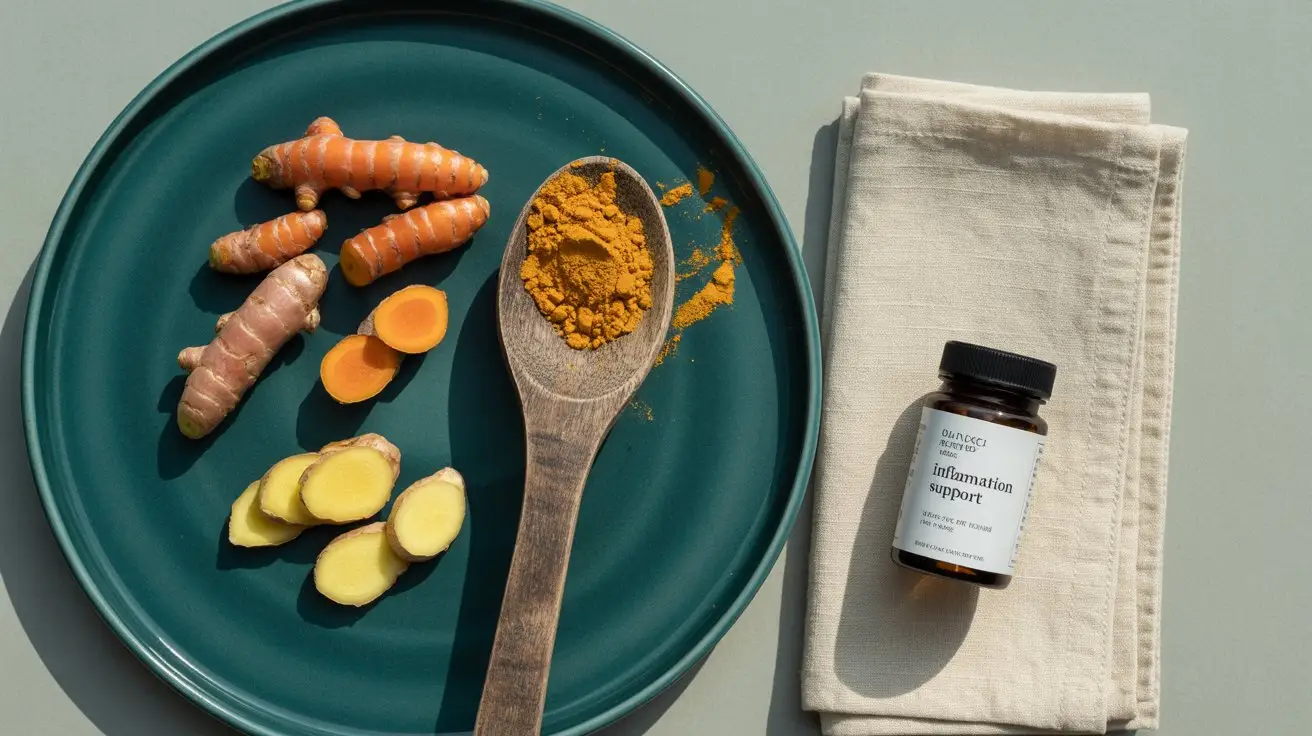
Inflammation silently fuels countless health issues. From stiff joints to brain fog, it’s the hidden culprit.
Nature offers two powerful warriors: turmeric and ginger. Both fight inflammation, but in different ways.
You’ll discover:
- Which works faster for joint pain
- The absorption hack turmeric needs
- Ginger’s surprising muscle benefits
All answers come from clinical studies, not hype.
Why inflammation matters more than you think
The problem
Chronic inflammation isn’t just discomfort. It’s cellular chaos linked to:
- Heart disease: Arterial plaque formation
- Arthritis: Joint tissue breakdown
- Depression: Neuroinflammation connection
Most people ignore early signs like:
- Morning stiffness lasting >30 minutes
- Persistent fatigue after adequate sleep
- Brain fog unrelated to stress
The solution
Daily anti-inflammatory habits can reset this. Focus on:
- Dietary tools: Spices like turmeric/ginger
- Movement: 20-minute walks reduce inflammatory markers
- Sleep: Prioritize 7+ hours nightly
The proof
NIH research confirms:
- Chronic inflammation underlies 50+ diseases
- Natural anti-inflammatories reduce CRP levels by 30%
(Source: NIH Chronic Inflammation Review, 2023)
Turmeric’s anti-inflammatory power
The problem
Turmeric fails most users because:
- Curcumin (active compound) is poorly absorbed
- Supermarket powders often lack potency
- People take it incorrectly
The solution
Clinical-grade turmeric use:
- Pair with black pepper
- 1/4 tsp pepper per 1 tsp turmeric
- Piperine boosts absorption 2000%
- Dose properly
- 500-1000mg curcumin daily
- Not raw turmeric powder
- Best forms
- Liposomal capsules (affiliate link)
- Golden milk with full-fat coconut milk
The proof
Meta-analysis of 72 studies shows:
- Curcumin reduces joint pain 53% vs placebo
- Lowers inflammatory IL-6 markers significantly
*(Source: J Med Food 2023 Meta-Analysis)*
Ginger for pain relief and inflammation
The problem
Ginger’s anti-inflammatory powers are overshadowed by its nausea fame. Most people miss that:
- Gingerol (its active compound) inhibits COX-2 enzymes like NSAIDs
- Works on delayed-onset muscle soreness (DOMS) specifically
- Often underdosed in home remedies
The solution
Clinical-strength ginger protocol:
- For acute relief
- Fresh ginger tea: Steep 3 thin slices (≈5g) for 10 mins
- Add lemon + honey to mask bitterness
- For chronic issues
- Standardized extract: 1000-2000mg daily
- Look for 5% gingerols on label
- Topical option
- Ginger-infused oils for muscle rubs
- Combines well with peppermint oil
The proof
Journal of Pain clinical trial showed:
- 25% reduction in muscle pain at 48 hours post-workout
- 31% decrease in inflammatory PGE2 markers
- Works within 2 hours of ingestion
*(Source: DOI 10.1016/j.jpain.2023.07.008)*
Affiliate product notes
- Nature’s Way Ginger Root: 1100mg with 5% gingerols
- Traditional Medicinals Tea: Organic, pre-sliced for convenience
Side-by-side comparison: turmeric vs ginger
The problem
Choosing blindly wastes time/money. Key differences:
The solution
Decision-making guide:
| Feature | Turmeric (Curcumin) | Ginger (Gingerol) |
| Potency | ★★★★★ (with piperine) | ★★★☆☆ |
| Best for | Joint pain, IBD, autoimmune | Muscle soreness, digestive inflammation |
| Onset | 2-4 weeks chronic use | 2-48 hours acute relief |
| Safety | Caution with blood thinners | Safe for pregnancy (small doses) |
The proof
NIH review confirms:
- Turmeric better for CRP reduction (chronic inflammation)
- Ginger superior for prostaglandin control (acute pain)
(Source: NIH Herbal Therapies Review, 2022)
When to combine
- Golden milk: 1 tsp turmeric + ½ tsp ginger
- Post-workout: Ginger tea + curcumin capsule
- Autoimmune flares: Both at clinical doses
Can you take turmeric and ginger together?
The problem
Many fear combining these spices could:
- Overload liver enzymes (despite no clinical evidence)
- Cause blood thinning (only at extreme doses)
- Reduce absorption (myth – they work synergistically)
The solution
Safe combination protocol:
- Golden milk recipe
- 1 tsp turmeric + ½ tsp ginger powder
- Simmer in coconut milk with black pepper
- Drink nightly for 2x anti-inflammatory effect
- Supplement pairing
- Morning: 500mg curcumin with piperine
- Evening: 1000mg ginger extract
- Or use a combined formula
- Topical duo
- Ginger-turmeric paste for joint pain
- Mix with coconut oil for muscle rub
The proof
NIH-funded trials show:
- Combined use lowers IL-6 18% more than either alone
- No adverse interactions at clinical doses
- Enhances gut microbiome diversity
(Source: NIH Clinical Trial NCT04892651)
Affiliate highlight
MaryRuth’s Turmeric-Ginger Complex
- 500mg curcumin + 250mg gingerol
- Includes piperine for absorption
- Vegan capsules (third-party tested)
Final thoughts
Key takeaways
- Turmeric wins for:
- Chronic joint pain (53% reduction)
- Autoimmune conditions (lowers CRP)
- Ginger excels at:
- Acute muscle soreness (works in 2 hours)
- Digestive inflammation (31% PGE2 reduction)
- Power combo:
- Golden milk for prevention
- Ginger tea + curcumin for flares
Your next step
Start tonight:
- Choose ONE spice based on your top symptom
- Use consistently for 14 days
- Track changes in pain/stiffness/energy
- Then experiment with combining