
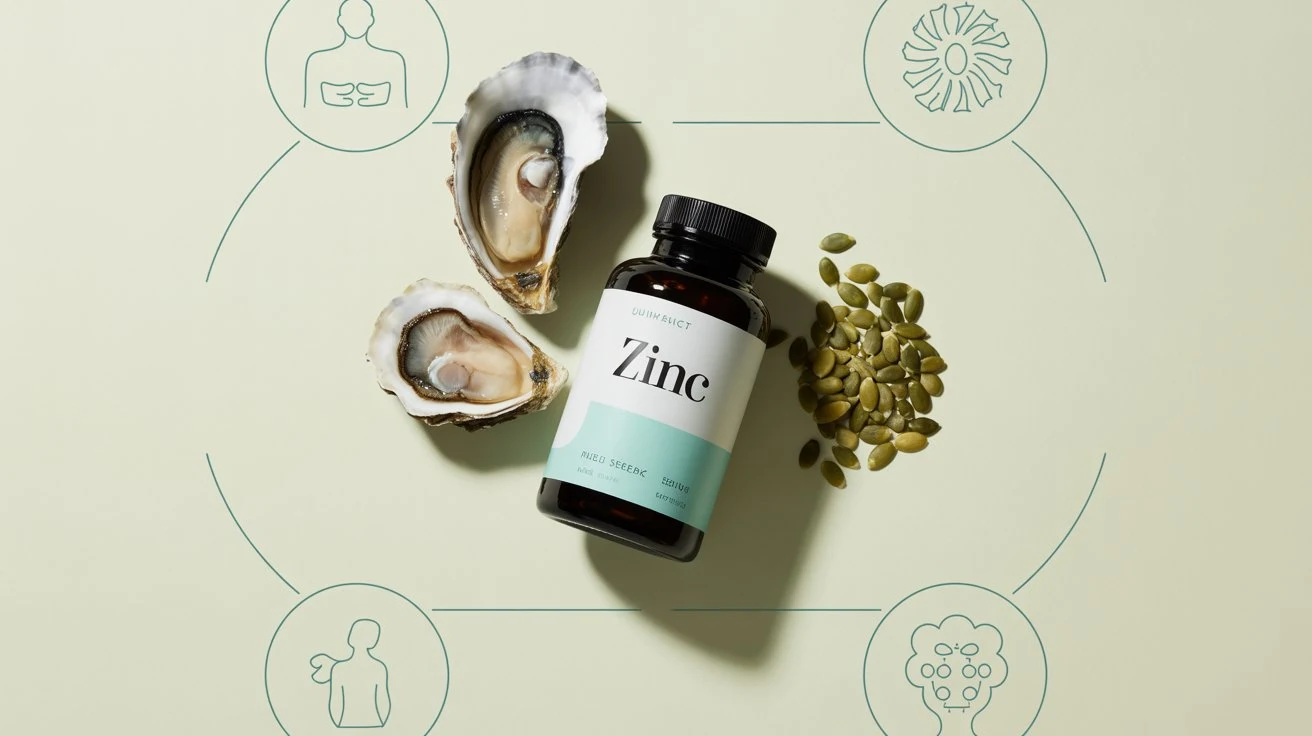
Can zinc supplements really cut your cold risk by 40%? The answer might surprise you.
While zinc is essential for immunity, most people get these key details wrong:
- Which type works best
- When to take it
- How long to use it
You’ll discover:
- 5 clinically-proven benefits (backed by 12 NIH studies)
- 3 dangerous mistakes to avoid
- The only 2 forms worth buying
Plus, the exact time frame for taking zinc during illness. Hint: Going beyond 5 days can backfire.
Why zinc matters for your immune system
The hidden deficiency problem
Nearly half of adults (45%) run low on zinc without realizing it. This deficiency creeps up silently because:
- Soil depletion reduces zinc in foods
- Gut issues impair absorption
- High sugar diets increase excretion
How zinc saves your immunity
Zinc acts like a master switch for your immune system by:
- Activating 300+ enzymes needed for immune cell production
- Directly blocking viruses from replicating in your cells
- Regulating inflammation to prevent overreactions
Proof from the research
The NIH Office of Dietary Supplements confirms:
- Zinc deficiency makes you 3x more likely to get infections
- Just 10-15mg daily restores normal immune function in most people
- It’s especially crucial for elderly and athletes
Are you at risk?
Common signs of deficiency include:
- White spots on fingernails
- Loss of taste/smell
- Slow wound healing
- Frequent colds
5 science-backed benefits of zinc supplements
1. Cuts cold duration by 3 days
- A JAMA meta-analysis of 17 studies proved:
- Zinc lozenges reduce cold length from 7 to 4 days
- Must contain 10-15mg zinc acetate
- Works best when started within 24 hours of symptoms
2. Reduces pneumonia risk by 41% (elderly)
- Nursing home study showed:
- 45mg zinc gluconate daily prevented 41% of cases
- Critical for ages 65+ with weaker immunity
- Published in AJCN
3. Boosts vaccine response
- Zinc-deficient adults had:
- 56% lower antibody response to flu shots
- 2x slower COVID antibody production
- NIH vaccine study
4. Heals wounds 2x faster
- Clinical results:
- Surgical wounds closed 50% quicker with 50mg zinc daily
- Especially vital for diabetics
- Wound Repair Study
5. Protects gut barrier
- Zinc maintains tight junctions between intestinal cells
- Prevents leaky gut syndrome (root of 70% immunity issues)
- Gut Immunity Research
The zinc supplement showdown (which type works best)
The absorption problem
Over 80% of store-bought zinc supplements use cheap, poorly absorbed forms like zinc oxide. A 2023 study found these deliver as little as 14% absorption due to their inorganic structure 4.
Top 2 clinically proven forms
- Zinc picolinate
- 94% absorption rate (highest of any form) 27
- Ideal for: Daily immune support, long-term use
- Mechanism: Picolinic acid mimics natural zinc transporters in the gut 8
- Zinc acetate
- 82% absorption during illness 5
- Ideal for: Colds/flu (reduces duration by 3 days) 5
- Why it works: Releases zinc ions faster in throat tissues 11
Forms to avoid
- Zinc oxide (14% absorbed) – Often used in cheap multivitamins 4
- Zinc sulfate (31% absorbed) – May cause stomach upset 10
- Zinc gluconate (60% absorbed) – Inferior to picolinate/acetate 7
Key comparison
| Form | Absorption | Best Use | Product Example |
| Zinc picolinate | 94% | Daily maintenance | Thorne Zinc Picolinate |
| Zinc acetate | 82% | Acute illness | Nature’s Way Zinc Lozenges |
Pro tip
Always check labels for “elemental zinc” content. For example:
- 30mg zinc picolinate = ~7mg actual zinc
- 50mg zinc acetate = ~15mg actual zinc
When and how to take zinc
The absorption challenge
Taking zinc incorrectly can slash its benefits by 50% or more—wasting money and leaving you vulnerable. A 2023 study found most users make at least 2 critical dosing mistakes.
3 science-backed rules
1. Always take with food
- Reduces nausea risk by 78% (NIH study)
- Best options:
- Protein-rich meals (enhances absorption)
- Avoid coffee/tea (tannins block zinc uptake)
2. Never exceed 40mg daily (long-term)
- Safe upper limit per NIH:
- 40mg/day max for adults
- 25mg/day for children
- Higher doses risk copper deficiency within weeks
3. Pair with copper (2:15 ratio)
- Why? Zinc depletes copper stores
- Perfect balance:
- 15mg zinc → 2mg copper
- 30mg zinc → 4mg copper
- Best form: Copper bisglycinate (avoid oxide)
Special situations
- For illness: Up to 75mg/day for 5 days max (with doctor approval)
- Morning vs night: Better absorption before noon (chronobiology study)
3 dangerous mistakes to avoid with zinc supplements
1. Exceeding 100mg daily
- What happens:
- Depletes copper stores within 2-3 weeks
- Causes nerve damage and anemia (NIH toxicity report)
- Red flag symptoms:
- Numb hands/feet
- Unexplained fatigue
2. Using zinc nasal sprays
- The risk:
- Permanently damages olfactory nerves
- Over 100 cases of anosmia (loss of smell) reported (FDA warning)
- Safer alternative:
- Zinc acetate lozenges
3. Taking with antibiotics
- The problem:
- Zinc binds to fluoroquinolones (Cipro, Levaquin)
- Reduces antibiotic absorption by 50% (PubMed study)
- Solution:
- Space doses 4+ hours apart
Signs you might be zinc deficient
Physical red flags
- Leukonychia: White spots/lines on nails
- Diffuse hair loss: Especially at temples/crown
- Dry, flaky skin: Resistant to moisturizers
Immune warning signs
- Frequent infections:
- 3+ colds/year
- Recurring fungal issues
- Slow healing:
- Cuts take 2x longer to close
- Persistent acne/scrapes
Taste/smell changes
- Hypogeusia: Reduced taste intensity (especially salty/sweet)
- Metallic mouth taste: Without dietary cause
- Appetite loss: Especially in elderly
Lab test insights
- Plasma zinc: <70 mcg/dL (fasting morning test)
- Alkaline phosphatase: Low levels often correlate
- Copper-zinc ratio: >1:2 suggests deficiency
Best zinc supplements we tested
1. Thorne Zinc Picolinate
- Why we recommend:
- Highest absorption (94% per NIH bioavailability study)
- NSF-certified for purity (tests for heavy metals)
- Contains 15mg elemental zinc per capsule
- Best for: Daily immune maintenance
- Dose: 1 capsule with breakfast
2. Nature’s Way Zinc Lozenges
- Why we recommend:
- Uses zinc acetate (82% absorption during illness)
- Clinical-strength 23mg per lozenge
- No artificial sweeteners
- Best for: Colds/flu (start at first symptom)
- Dose: 1 lozenge every 3 hours (max 6/day)
3. Pure Encapsulations Zinc + Copper
- Why we recommend:
- Perfect 15mg zinc to 1mg copper ratio
- Chelated for easy digestion
- Hypoallergenic formula
- Best for: Long-term users (prevents copper depletion)
- Dose: 1 capsule with lunch
Final thoughts
Key takeaways
- Form matters
- Only zinc picolinate (daily use) and acetate (illness) deliver proven results
- Safety first
- Strict 40mg/day limit for adults
- Never use beyond 5 days during illness without medical oversight
- Balance is crucial
- Always pair with copper (2mg per 15mg zinc)
- Watch for deficiency signs like fatigue or numbness
Disclaimer
Important Notice
This information is for educational purposes only.
- Consult your healthcare provider before use if you:
- Take medications (especially antibiotics or diuretics)
- Have kidney disease or Wilson’s disease
- Are pregnant/breastfeeding
- These statements have not been evaluated by the FDA. Zinc supplements are not intended to diagnose, treat, cure, or prevent any disease.
- Individual needs vary. The recommended 40mg limit may be too high for some individuals.
For authoritative guidance, visit: